The digital landscape across Northeast India is growing rapidly. From bustling commercial hubs like Guwahati to tourism and cultural capitals like Shillong, Gangtok, Agartala, and Imphal, local enterprises, startups, and institutions are establishing a stronger online presence.
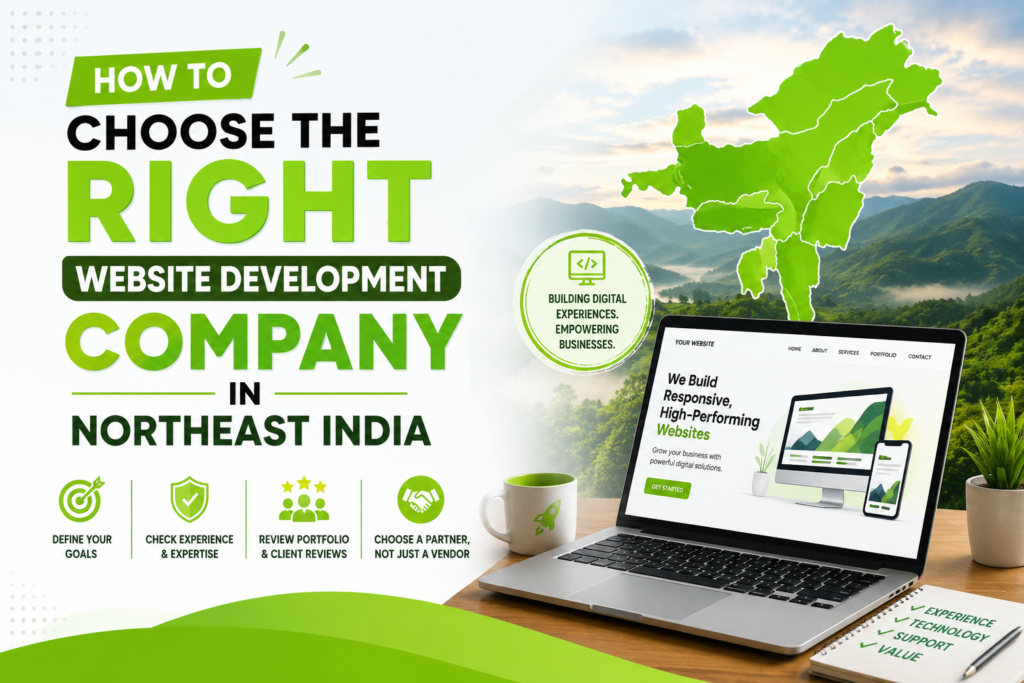
Selecting the right website development partner requires finding an agency that combines modern technical capabilities with an understanding of regional audience behavior.
Key Considerations for Choosing a Web Development Partner
1. Evaluate Regional Market Insight & Cultural Nuance
Building a brand presence in the Northeast involves understanding diverse local demographics, consumer habits, and visual traditions.
- Local SEO Expertise: Ensure the agency knows how to optimize for hyper-local search intent across cities like Guwahati, Silchar, Dibrugarh, Shillong, or Kohima.
- Multilingual & Localization Capability: If your primary audience requires content in Assamese, Bengali, or specific regional dialects alongside English, check if the agency can handle multi-language routing and font rendering.
- Authentic Branding: A good regional partner will respect cultural aesthetics without resorting to generic templates, ensuring your brand strikes the right chord with local consumers.
2. Verify Modern Tech Stack & Scalability
Avoid agencies that rely on outdated page builders or lock you into rigid proprietary systems. Request details about their tech stack:
| Website Category | Recommended Technologies | Ideal For |
| Content & Business Sites | WordPress, Webflow, GeneratePress, Elementor | Small-to-medium businesses, blogs, corporate portals |
| E-Commerce & Retail | WooCommerce, Shopify, Next.js + Stripe/Razorpay | Local handicraft brands, regional tea direct-to-consumer (D2C) brands, apparel |
| Custom Web Apps / SaaS | React, Next.js, Node.js, Laravel | Tech startups, booking platforms, custom ERPs/portals |
3. Scrutinize Portfolio Realism and Performance Metrics
A polished design is useless if it loads slowly or breaks on mobile networks.
- Mobile-First Optimization: Over 85% of traffic across tier-2 and tier-3 cities in the region originates from mobile devices. Ask for live links to past client projects and test them on your smartphone.
- Page Speed Performance: Run potential agencies’ portfolio websites through Google PageSpeed Insights. Look for performance scores above 80 on mobile and fast Core Web Vitals.
4. Require Transparent Pricing and Clear Scope
Website development costs in the Northeast can range from budget-friendly template builds to full-scale enterprise applications. Make sure you receive a clear breakdown covering:
- Initial Development: Design, front-end/back-end development, and content insertion.
- Domain & Hosting Setup: Clarify who owns the hosting account and domain rights (you should always own them directly).
- Third-Party Costs: Payment gateway integrations, premium plugins, dynamic font licenses, and security certificates (SSL).
Important Note: Always insist that the agency transfers full admin ownership of all domains, code repositories (e.g., GitHub), and hosting servers upon final payment.
5. Confirm Post-Launch Support and Maintenance
A website is an active asset, not a one-off deliverable. Technology changes, software updates are released, and security vulnerabilities emerge.
- Does the company offer a dedicated SLA (Service Level Agreement) for maintenance?
- How fast is their turnaround time for urgent bug fixes or database restores?
- Do they provide basic training so your team can publish blog posts, edit pages, or upload new products independently?
Essential Questions to Ask Before Signing a Contract
- “Can you share 3 live client sites you’ve built in the last 12 months with similar functionality?”
- “Who will own the domain, hosting, and custom source code once the project is finished?”
- “How do you handle search engine optimization (SEO) and mobile responsiveness during the build phase?”
- “What is the exact timeline and milestone payment structure for this project?”
- “What ongoing maintenance plans do you offer after the site goes live?”