
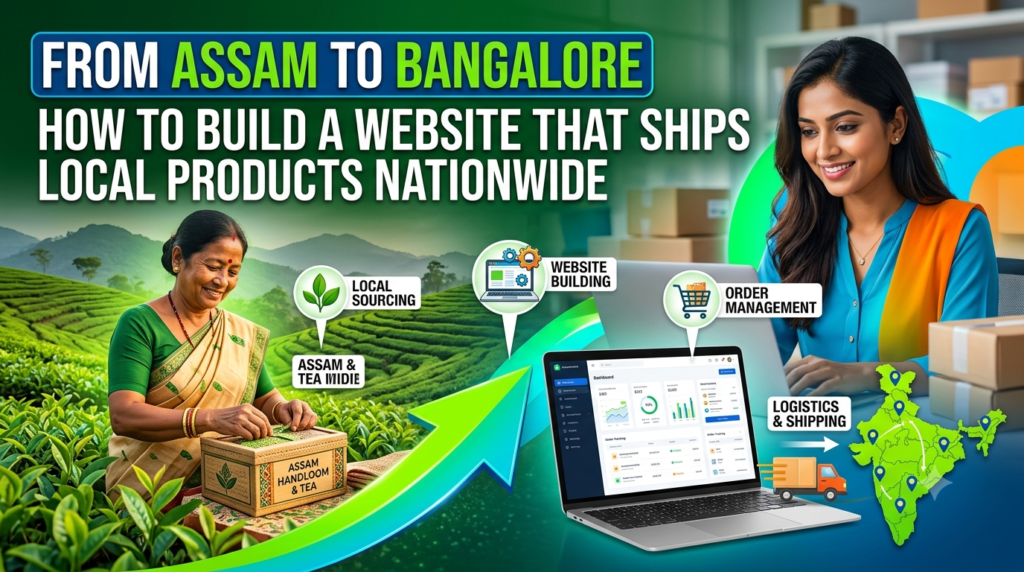
`India has a remarkable diversity of handloom products, traditional crafts, organic agricultural produce, natural foods, and locally made products. From Assamese silk and Kashmiri handicrafts to organic spices, tea, honey, rice, fruits, and handmade textiles, local producers have enormous opportunities to reach customers beyond their geographical boundaries.
A professionally designed e-commerce website for handloom and organic products can connect artisans, farmers, self-help groups, cooperatives, manufacturers, and small businesses directly with customers across India. Instead of depending entirely on physical stores, distributors, or marketplaces, we can create an independent online platform where customers discover products, place orders, make secure payments, and receive products at their doorstep.
Building such a platform requires more than simply adding products to an online store. We need to consider website design, product presentation, payment gateways, logistics, inventory management, mobile responsiveness, SEO, security, customer support, and trust-building features.
Why Build an E-Commerce Website for Handloom and Organic Products?
The first advantage of an online store is geographical reach. A handloom producer located in Assam, for example, can sell traditional products to customers in Delhi, Mumbai, Bengaluru, Hyderabad, Chennai, Kolkata, or other parts of India.
Similarly, an organic producer can present products directly to customers who are actively looking for organic food, natural products, chemical-free produce, traditional foods, and sustainable products.
An independent e-commerce website allows us to:
- Reach customers across India
- Build a recognizable brand
- Accept online orders 24/7
- Display a complete product catalog
- Accept digital payments
- Manage inventory
- Collect customer enquiries
- Build customer loyalty
- Promote regional and traditional products
- Reduce dependency on offline distribution
- Generate organic traffic through SEO
- Run digital marketing campaigns
- Develop long-term customer relationships
Most importantly, we can create a platform that tells the story behind every product.
Define the Products and Target Customers
Before developing the website, we should clearly define what we are selling. A handloom and organic e-commerce store may include categories such as:
Handloom Products
- Traditional sarees
- Mekhela chador
- Handwoven fabrics
- Cotton textiles
- Silk products
- Shawls
- Stoles
- Handloom dress materials
- Home décor products
- Traditional handicrafts
- Bamboo and cane products
Organic and Natural Products
- Organic rice
- Organic tea
- Honey
- Spices
- Pulses
- Fruits
- Vegetables
- Traditional food products
- Pickles
- Natural oils
- Herbal products
- Locally sourced agricultural products
We should then identify the primary customer groups. These may include individual consumers, families, health-conscious buyers, gift shoppers, fashion-conscious customers, retailers, restaurants, hotels, and businesses.
Choose the Right E-Commerce Platform
The technology used to build the website should match the business model. For a small or medium-sized business, WordPress with WooCommerce can provide a flexible and cost-effective foundation. It allows us to create product pages, categories, shopping carts, checkout systems, payment integration, coupons, customer accounts, order management, and SEO-friendly content.
For businesses expecting very large product catalogs or highly customized operations, we may consider a custom e-commerce application. The important consideration is not simply choosing the most expensive technology. We should choose a platform that can support:
- Product management
- Inventory management
- Order processing
- Payment integration
- Shipping integration
- Customer accounts
- Discount management
- SEO
- Analytics
- Security
- Future expansion
Create a Professional E-Commerce Website Design
The website should immediately communicate quality, authenticity, and trust. For handloom and organic products, visual presentation is especially important. Customers cannot physically touch or inspect the products before purchasing. Therefore, photographs, descriptions, specifications, certifications, and product stories become critical.
The homepage should contain sections such as:
- Hero Banner
- Featured Products
- Handloom Collection
- Organic Products
- Regional Products
- Best Sellers
- New Arrivals
- Why Choose Us
- Artisan or Farmer Stories
- Customer Reviews
- Frequently Asked Questions
- Blog or Knowledge Center
- Newsletter Subscription
We should use high-quality product photography and maintain consistent image dimensions throughout the website.
Build Detailed Product Pages
A product page should answer almost every question a potential customer may have. For a handloom product, we can include:
- Product name
- Product photographs
- Price
- Available colors
- Available sizes
- Material
- Fabric type
- Weaving technique
- Origin
- Artisan information
- Care instructions
- Delivery information
- Return policy
- Stock availability
- Customer reviews
For organic products, we can include:
- Product name
- Price
- Weight
- Ingredients
- Source
- Farming method
- Packaging details
- Shelf life
- Storage instructions
- Nutritional information where applicable
- Certification information where applicable
- Delivery information
Transparency increases customer confidence, particularly when customers are purchasing food, natural products, or premium handloom items online.
Add Secure Online Payment Options
A pan-India e-commerce website must provide convenient payment methods. We should consider integrating popular Indian payment options such as:
- UPI
- Credit cards
- Debit cards
- Net banking
- Mobile wallets
- Payment links
- Cash on delivery, where commercially appropriate
The checkout process should be simple and mobile-friendly. Customers should not be forced to complete unnecessary forms. A good checkout experience should require only essential information such as:
Name → Mobile Number → Address → Payment Method → Order Confirmation
We should also display relevant shipping charges, taxes, discounts, and the final payable amount clearly before payment.
Integrate Shipping and Delivery Across India
Logistics is one of the most important components of a pan-India e-commerce business. The website should support shipping rules based on:
- Delivery location
- Product weight
- Product dimensions
- Order value
- Pincode
- Shipping partner
- Delivery speed
For fragile handloom products, glass packaging, food products, or premium goods, packaging requirements should be considered during the logistics planning stage. The customer should receive order confirmation, shipping updates, and delivery notifications whenever possible.
Implement Inventory Management
We should maintain accurate inventory information to avoid accepting orders for unavailable products. The e-commerce system should track:
- Available stock
- Reserved stock
- Sold products
- Low-stock products
- Out-of-stock products
- Product variations
- Incoming inventory
For handmade products, inventory management can be particularly important because many products may be available in limited quantities.
Add Strong Search and Product Filters
As the product catalog grows, customers need an efficient way to find products. We should provide search and filters based on:
- Product category
- Price
- Material
- Color
- Size
- Region
- Product type
- Availability
- Organic category
- Brand
- Customer rating
A strong search system can significantly improve the shopping experience and help customers discover relevant products faster.
Make the Website Mobile-Friendly
A large percentage of Indian online shoppers use smartphones. Therefore, a mobile-first e-commerce website design is essential. The mobile website should have:
- Fast-loading pages
- Large product images
- Easy navigation
- Mobile-friendly menus
- Simple checkout
- Clickable phone numbers
- WhatsApp enquiry options where appropriate
- Easy-to-use search
- Secure payment experience
We should also optimize images, scripts, fonts, and other website resources to improve loading speed.
Use SEO to Reach Customers Across India
Search engine optimization can help the website attract customers who are already searching for relevant products. We can create SEO-focused pages targeting searches such as:
- Buy handloom products online in India
- Assam handloom products online
- Organic products online in India
- Buy organic rice online
- Handmade products from Assam
- Traditional Indian handloom online
- Organic tea from Assam
- Buy authentic handloom sarees online
Instead of optimizing only product pages, we should create useful educational content. For example:
Potential Blog Topics
- Best Handloom Products from Assam
- How to Identify Authentic Handloom Products
- Benefits of Buying Handwoven Products
- How Organic Farming Supports Sustainable Agriculture
- Best Organic Products to Buy Online in India
- Traditional Indian Textiles and Their Regional Heritage
- How to Care for Handloom Sarees
- Why Consumers Are Choosing Organic Food Products
- Difference Between Handloom and Powerloom Products
- Guide to Buying Authentic Silk Online
This content can attract visitors through Google and introduce them to relevant products.
Create Dedicated Regional Landing Pages
For a business selling products throughout India, regional SEO can become a valuable growth strategy. We can create dedicated pages for major locations such as:
- Handloom Products in Delhi
- Handloom Products in Mumbai
- Organic Products in Bengaluru
- Organic Products in Kolkata
- Traditional Products from Assam
- Northeast Indian Products Online
These pages should contain genuinely useful regional information rather than duplicated content.
Build Trust Through Authenticity
Trust is critical for online commerce. The website should clearly display:
- About Us
- Contact Information
- Business Address
- Customer Support
- Shipping Policy
- Return and Refund Policy
- Privacy Policy
- Terms and Conditions
- Product authenticity information
- Applicable certifications
- Customer reviews
- Secure payment indicators
For handloom products, introducing the artisan, weaving community, cooperative, or region of origin can make the product more meaningful to customers. For organic products, we should make factual and verifiable claims rather than using unsupported statements.
Add Customer Reviews and Testimonials
Customer reviews provide social proof. We should allow verified customers to review products and, where appropriate, upload photographs. Useful review information can include:
- Product quality
- Packaging
- Delivery experience
- Product appearance
- Value for money
- Overall satisfaction
Positive customer experiences can help new visitors make purchasing decisions with greater confidence.
Use WhatsApp and Direct Customer Communication
For businesses selling specialized handloom and organic products, customers may have questions before purchasing. A WhatsApp or enquiry feature can help customers ask about:
- Product availability
- Sizes
- Customization
- Bulk orders
- Wholesale purchases
- Delivery
- Product specifications
This is particularly valuable for expensive handloom products where customers may want additional information before completing a purchase.
Add Bulk and Wholesale Ordering
Once the website begins attracting customers, we can expand beyond individual retail sales. A dedicated Wholesale or Bulk Order section can target:
- Retailers
- Boutiques
- Hotels
- Restaurants
- Corporate buyers
- Gift companies
- Event organizers
- Distributors
A simple enquiry form can collect product requirements, quantity, location, and contact information.
Use Analytics to Improve Sales
An e-commerce website should not operate without measuring customer behavior. We should monitor:
- Website visitors
- Product views
- Add-to-cart activity
- Checkout abandonment
- Completed purchases
- Revenue
- Top-selling products
- Traffic sources
- Search queries
- Returning customers
This information helps us understand which products generate demand and where customers leave the buying process.
Create a Scalable E-Commerce Business
The initial website may contain a limited number of products, but we should build the architecture with future growth in mind. The platform can later include:
- Multiple vendors
- Artisan accounts
- Farmer accounts
- Vendor dashboards
- Subscription products
- Loyalty programs
- Referral programs
- Gift cards
- Wholesale pricing
- Advanced inventory management
- Mobile applications
- Personalized product recommendations
A scalable architecture prevents us from rebuilding the entire platform when the business expands.
Final Thoughts
Building an e-commerce website for selling handloom and organic produce directly across India creates an opportunity to connect local producers with customers throughout the country.
The strongest platform combines beautiful product presentation, authentic storytelling, secure payments, reliable logistics, mobile-friendly design, strong SEO, transparent business information, and excellent customer service.
For handloom businesses, the website should communicate craftsmanship and cultural heritage. For organic producers, it should communicate transparency, quality, sourcing, and responsible production.
When these elements work together, an e-commerce website becomes more than an online catalog. It becomes a digital marketplace and long-term brand-building platform that can help local producers reach national customers while creating a stronger direct relationship between producers and consumers.
By starting with a focused product range, developing a trustworthy shopping experience, investing in SEO-driven content, and gradually expanding the platform, we can build an online business capable of serving customers across India while promoting India’s diverse handloom traditions and locally produced goods.