

Basic Website Design: A Complete Beginner’s Guide to Creating a Professional Website
A website is no longer just an online brochure. For a business, professional, freelancer, school, startup, or local service provider, it can become one of the most important digital assets for building credibility, attracting visitors, generating enquiries, and increasing sales.
But creating a website does not always mean building something complicated.
For many businesses, basic website design is the best starting point.
A well-planned basic website can be simple, fast, mobile-friendly, easy to navigate, search-engine friendly, and focused on one important objective: helping visitors understand your business and take action.
This complete guide explains what basic website design means, what pages you need, how a website should be structured, important design principles, common mistakes, SEO considerations, costs, and how to create a website that can grow with your business.
What Is Basic Website Design?
Basic website design refers to creating a simple, functional, professional, and user-friendly website without unnecessary complexity.
A basic business website generally includes:
- A homepage
- About Us page
- Services or Products page
- Contact page
- Navigation menu
- Call-to-action buttons
- Contact form
- Mobile-responsive layout
- Basic SEO setup
- Fast-loading pages
- Clear business information
The goal is not to fill every page with animations and complicated features.
The goal is to create a website that answers the visitor’s most important questions quickly:
Who are you?
What do you offer?
Why should I choose you?
How can I contact you?
That is the foundation of effective website design.
Why Is Basic Website Design Important?
A simple website can provide significant value when it is designed correctly.
1. Builds Online Credibility
Customers often search for a business online before contacting it.
A professional website can provide information about your company, services, experience, location, contact details, and customer support.
A poorly designed or outdated website can have the opposite effect.
2. Helps Customers Find You
Your website can appear in search engines when people search for products or services related to your business.
For example:
- Website designer in Guwahati
- Digital marketing agency in Assam
- School website design
- Hospital website development
- Local SEO services
- E-commerce website development
Good website structure combined with SEO can help search engines understand your business.
3. Works 24/7
Unlike a physical office, your website can provide information at any time.
Visitors can learn about your:
- Services
- Products
- Business
- Location
- Pricing
- Contact information
- Frequently asked questions
even outside business hours.
4. Generates Leads
A website can turn visitors into potential customers through:
- Contact forms
- Phone numbers
- WhatsApp buttons
- Enquiry forms
- Consultation requests
- Newsletter subscriptions
- Product enquiries
5. Supports Digital Marketing
Your website can act as the central destination for your digital marketing campaigns.
Social media posts, Google searches, advertisements, email marketing, and other campaigns can send users to specific website pages.
Basic Website Design vs. Complex Website Development
These terms are often confused.
Basic website design focuses on creating a simple and effective online presence.
Complex website development may involve advanced functionality such as:
- Customer dashboards
- Online payments
- Membership systems
- Booking systems
- Learning management systems
- Advanced databases
- Custom applications
- APIs
- Automation
- Multi-vendor marketplaces
A small business may not need these features initially.
Starting with a basic website can be more affordable and easier to manage, while advanced features can be added later as the business grows.
Essential Elements of Basic Website Design
A professional basic website should include several important elements.
1. Clear Logo and Branding
Your logo should be visible and easy to identify.
Your website should maintain consistency in:
- Logo
- Colors
- Typography
- Images
- Button styles
- Brand messaging
Consistent branding makes the website look more professional.
2. Simple Navigation
Website visitors should not have to struggle to find information.
A basic navigation menu could include:
Home | About | Services | Blog | Contact
For larger websites, dropdown menus can organize additional pages.
Keep navigation simple and predictable.
3. Strong Homepage
Your homepage is often the first page visitors see.
A good homepage should quickly communicate:
What you do + Who you serve + Why you are different + What visitors should do next
For example:
Professional Website Design for Small Businesses in Assam
Follow this with a short explanation and a CTA such as:
Get a Free Consultation
or
Request a Website Quote
What Should a Homepage Contain?
A basic homepage can follow this structure:
Hero Section
Include:
- Strong headline
- Short description
- Primary CTA
- Relevant visual
About Section
Briefly explain who you are.
Services Section
Show your main services.
Benefits Section
Explain why customers should choose you.
Testimonials
Display genuine customer feedback where available.
Portfolio
Show examples of previous work.
FAQ
Answer common customer questions.
Contact Section
Make it easy for visitors to contact you.
4. Mobile-Friendly Design
A large percentage of website visitors may access your website using smartphones.
Therefore, your website should work properly across:
- Smartphones
- Tablets
- Laptops
- Desktop computers
A responsive website automatically adapts its layout to different screen sizes.
Important mobile considerations include:
- Readable text
- Proper spacing
- Large enough buttons
- Easy navigation
- Optimized images
- No horizontal scrolling
- Fast loading
Mobile responsiveness should be considered a basic requirement, not an optional feature.
5. Fast Website Loading
Website speed affects user experience.
Visitors may leave a website if pages take too long to load.
Common causes of slow websites include:
- Large images
- Too many plugins
- Poor hosting
- Excessive JavaScript
- Unoptimized CSS
- Unnecessary animations
- Poorly optimized themes
- Third-party scripts
To improve performance:
- Compress images
- Use modern image formats where appropriate
- Enable caching
- Minimize unnecessary plugins
- Optimize CSS and JavaScript
- Use reliable hosting
- Keep the design lightweight
6. Clear Call-to-Action
A visitor should know what to do next.
Examples include:
- Contact Us
- Get a Quote
- Call Now
- Request Consultation
- Book an Appointment
- Shop Now
- Learn More
- Download Brochure
- Send Enquiry
Don’t hide your CTA.
Make important actions visually clear without overwhelming the visitor with too many buttons.
7. Professional Typography
Typography strongly affects readability.
A basic website usually works best with a limited number of fonts.
Use:
- One font for most text
- A second font only when necessary
- Clear heading hierarchy
- Comfortable line spacing
- Readable font sizes
Avoid using too many decorative fonts.
8. Effective Use of Colors
Your website colors should support your branding and readability.
A basic color system could contain:
- Primary brand color
- Secondary color
- Background color
- Text color
- CTA color
Avoid using too many competing colors.
The objective is to create visual consistency rather than make every section look different.
9. High-Quality Images
Images can make a website more attractive and communicate information quickly.
However, images should be relevant.
For example, a:
Hospital website
could use appropriate healthcare imagery.
A:
Restaurant website
could showcase food, interiors, and dining experiences.
A:
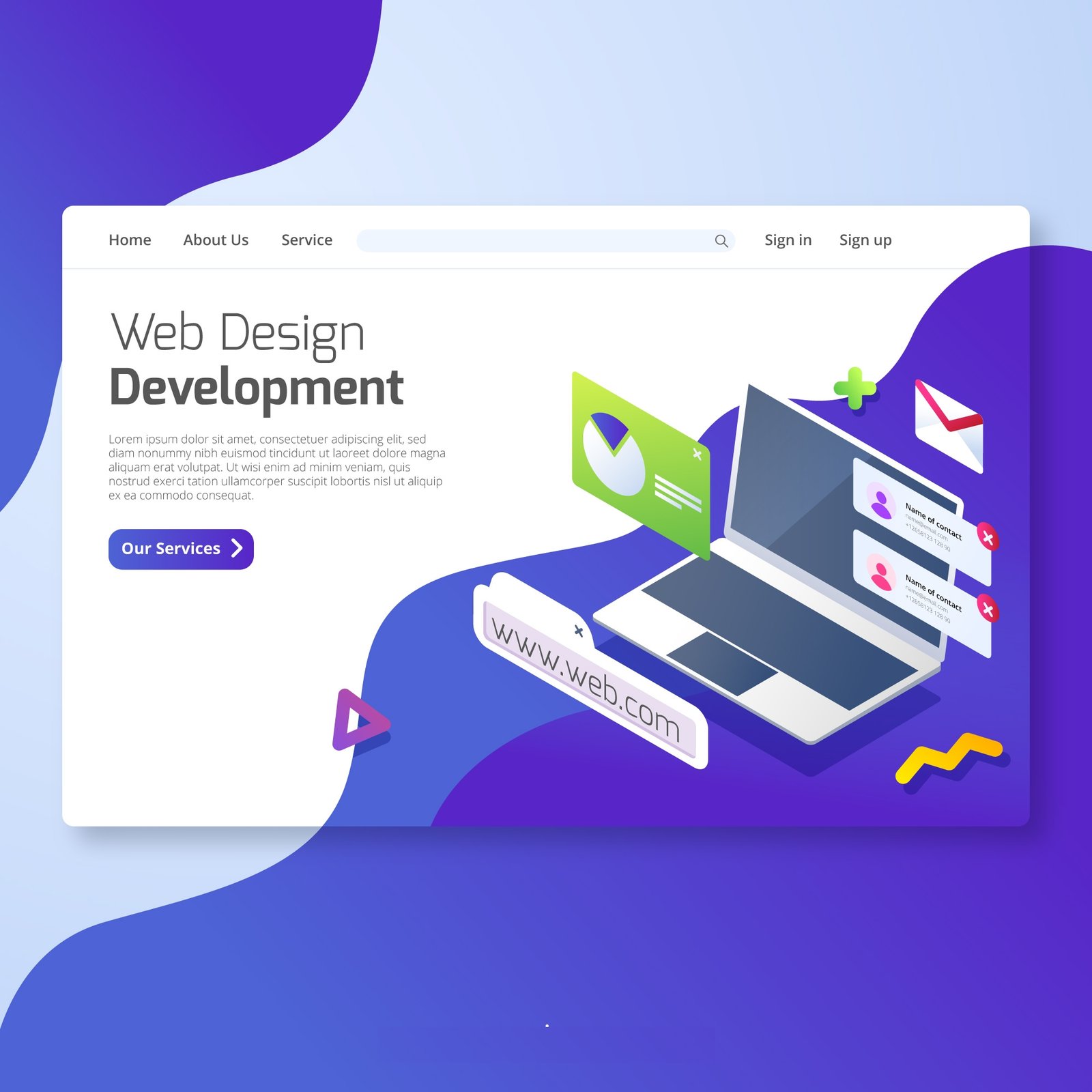
Web development company
could display websites, dashboards, devices, and digital interfaces.
Always optimize images before uploading them.
10. Easy-to-Read Content
Website content should be written for visitors, not just search engines.
Use:
- Short paragraphs
- Descriptive headings
- Bullet points
- Tables where useful
- Clear language
- Relevant keywords
- Strong CTAs
Instead of writing a large block of text, break information into smaller sections.
Essential Pages for a Basic Website
A simple business website usually needs several core pages.
Home
Introduces the business and highlights its main offerings.
About Us
Explains:
- Who you are
- Your experience
- Your mission
- Your values
- Why customers should trust you
Services
Explain each major service clearly.
Each important service can eventually have its own dedicated page.
Contact Us
Include:
- Phone number
- Address
- Contact form
- Business hours
- Map where appropriate
Blog
A blog can help businesses publish useful information and target additional search queries.
Privacy Policy
Explains how visitor information is handled.
Terms and Conditions
Defines the terms under which visitors use your website or services.
Depending on your business, additional pages may include:
- Portfolio
- Testimonials
- FAQ
- Pricing
- Products
- Careers
- Case Studies
- Resources
Basic Website Structure
A simple website architecture could look like this:
Home
│
├── About
│
├── Services
│ ├── Service 1
│ ├── Service 2
│ └── Service 3
│
├── Portfolio
│
├── Blog
│
├── FAQ
│
└── Contact
This structure makes it easier for both visitors and search engines to understand your website.
Basic Website Design and SEO
Design and SEO should not be treated as completely separate activities.
A website can look beautiful but still struggle to attract organic traffic.
Basic SEO considerations include:
Keyword Research
Identify what your target customers search for.
For example:
Basic keyword:
Website Design
More specific keywords:
Basic Website Design Services
Website Design for Small Business
Affordable Website Design
Website Design in Guwahati
Specific search phrases often provide more focused targeting opportunities.
Optimize Page Titles
Each important page should have a descriptive title.
For example:
Basic Website Design Services for Small Businesses
is more informative than:
Services
Use Proper Headings
Use headings logically:
H1 → H2 → H3
Typically, the primary page topic should be represented by the H1.
For example:
H1
Basic Website Design: Complete Guide
H2
What Is Basic Website Design?
H2
Essential Website Design Elements
H3
Mobile-Friendly Design
H3
Website Speed
This creates a logical content hierarchy.
Optimize Images
Use descriptive image filenames and appropriate alternative text.
Instead of:
IMG12345.jpg
use something descriptive such as:
basic-website-design-example.jpg
Alt text should describe the image accurately when the image conveys meaningful information.
Create SEO-Friendly URLs
Keep URLs short and descriptive.
For example:
/basic-website-design/
is easier to understand than a URL containing unnecessary parameters or random characters.
Internal Linking
Internal links connect relevant pages within your website.
For example, a blog post about:
How Much Does a Website Cost?
could link to:
Website Design Services
and:
Website Cost Calculator
Internal linking helps visitors discover related information and can help search engines understand relationships between pages.
Local SEO for Basic Business Websites
If you operate a local business, your website should clearly communicate your service area.
For example:
Website Design Services in Guwahati, Assam
You can create useful location-specific pages when you genuinely serve those areas.
Include relevant business information such as:
- Business name
- Address
- Phone
- Service areas
- Opening hours
- Directions
- Local testimonials
- Relevant local content
Avoid creating dozens of nearly identical location pages simply by changing the city name.
Accessibility in Basic Website Design
A professional website should be usable by as many people as possible.
Consider:
- Sufficient color contrast
- Descriptive links
- Keyboard accessibility
- Alternative text for meaningful images
- Clear form labels
- Readable typography
- Logical heading structure
- Visible focus indicators
Accessibility is not merely a design preference. It contributes to a better overall user experience.
Basic Website Security
Security should be considered from the beginning.
Important measures include:
- HTTPS/SSL
- Strong administrator passwords
- Updated CMS
- Updated plugins and themes
- Regular backups
- Security monitoring
- Limited administrator access
- Reliable hosting
If your website collects customer information, take additional care with data protection and form security.
Basic Website Design for Different Businesses
The ideal website structure depends on the business.
Small Business
Recommended:
- Home
- About
- Services
- Testimonials
- Contact
Freelancer
Recommended:
- Home
- About
- Portfolio
- Services
- Testimonials
- Contact
School
Recommended:
- Home
- About
- Academics
- Admissions
- Facilities
- Faculty
- Notices
- Gallery
- Contact
Hospital
Recommended:
- Home
- About
- Departments
- Doctors
- Services
- Appointment
- Patient Information
- Contact
Restaurant
Recommended:
- Home
- Menu
- About
- Gallery
- Reservations
- Location
- Contact
E-commerce Business
An online store requires more functionality, including:
- Product catalogue
- Product pages
- Shopping cart
- Checkout
- Payment gateway
- Order management
- Customer account
- Shipping information
- Returns policy
Therefore, an e-commerce website goes beyond a basic informational website.
Basic Website Design Process
Creating a website becomes easier when the project follows a structured process.
Step 1: Define the Goal
Ask:
What should this website achieve?
Possible goals include:
- Generate leads
- Sell products
- Get phone calls
- Build credibility
- Share information
- Accept bookings
- Promote services
Step 2: Identify Your Audience
Determine who will use the website.
For example:
- Local customers
- Students
- Parents
- Patients
- Business owners
- Professionals
- Online shoppers
Understanding the audience influences the design, language, navigation, and CTA.
Step 3: Plan the Pages
Create a sitemap before designing.
Start with essential pages and expand later.
Step 4: Prepare Content
Collect:
- Logo
- Business description
- Services
- Images
- Contact information
- Testimonials
- FAQs
- Pricing
- Certifications
- Portfolio
Good content makes the design process much easier.
Step 5: Create the Design
Develop the visual structure of the website.
Focus on:
- Layout
- Typography
- Colors
- Spacing
- Images
- Navigation
- CTA placement
Step 6: Develop the Website
The approved design is converted into a functional website.
Depending on the project, this could involve:
- WordPress
- Website builders
- HTML/CSS/JavaScript
- Custom development
- Other CMS platforms
Step 7: Optimize for Mobile
Test every major page on different screen sizes.
Step 8: Test Everything
Before launch, test:
- Navigation
- Forms
- Buttons
- Links
- Images
- Mobile layout
- Page speed
- Browser compatibility
- HTTPS
- Contact information
Step 9: Launch
Connect the domain, hosting, SSL, analytics, search tools, and other required services.
Step 10: Maintain the Website
Website development doesn’t end at launch.
Regularly:
- Update content
- Update software
- Check links
- Back up the website
- Monitor performance
- Improve SEO
- Add useful content
Common Basic Website Design Mistakes
1. Too Much Information on the Homepage
A homepage should guide visitors rather than overwhelm them.
2. Poor Mobile Experience
A website that looks good on desktop but breaks on mobile is not truly responsive.
3. No Clear CTA
Visitors shouldn’t have to figure out how to contact you.
4. Slow Loading
Large images and unnecessary scripts can hurt performance.
5. Difficult Navigation
If users cannot find important information quickly, they may leave.
6. Stock Images Everywhere
Generic images can make a business look less authentic.
Use genuine business photographs where possible.
7. Ignoring SEO
Designing a website without considering search visibility can limit organic growth.
8. No Maintenance Plan
An outdated website can create security, performance, and credibility problems.
How Much Does Basic Website Design Cost?
The cost depends on several factors.
These may include:
- Number of pages
- Design complexity
- Platform
- Hosting
- Domain
- Content creation
- Logo/branding
- SEO
- Forms
- Custom functionality
- Maintenance
- Developer experience
A simple brochure website generally costs less than a custom web application or e-commerce platform.
Instead of choosing a website based solely on the lowest price, evaluate:
Design + performance + security + usability + SEO + support.
A cheap website that generates no enquiries may ultimately cost more than a professionally planned website.
Basic Website Design Checklist
Before launching your website, use this checklist:
Design
- Professional layout
- Consistent branding
- Clear typography
- Good spacing
- High-quality images
- Responsive design
Content
- Clear homepage message
- About page
- Services/products
- Contact details
- FAQs
- Testimonials where applicable
SEO
- SEO-friendly titles
- Proper headings
- Descriptive URLs
- Optimized images
- Internal links
- Useful original content
- Sitemap
- Search engine indexing setup
Performance
- Optimized images
- Caching
- Lightweight pages
- Fast hosting
- Mobile testing
Security
- HTTPS
- Updated software
- Strong passwords
- Backups
- Security monitoring
Conversion
- Clear CTA
- Contact form
- Phone number
- WhatsApp/contact option where appropriate
- Easy enquiry process
Basic Website Design: Frequently Asked Questions
What is basic website design?
Basic website design is the process of creating a simple, professional, responsive, and user-friendly website with essential pages and functionality.
Is a basic website enough for a small business?
Yes. Many small businesses can start with a well-designed informational website containing their business information, services, contact details, testimonials, and enquiry options.
How many pages does a basic website need?
There is no fixed number. A small business may start with four to six core pages such as Home, About, Services, Contact, Blog, and legal pages.
Does a basic website need SEO?
Yes. Basic SEO should be considered from the beginning so search engines can properly understand and index the website.
Should a basic website be mobile-friendly?
Absolutely. Responsive design should be a fundamental part of modern website design.
Can I add more features later?
Yes. A properly planned website can often be expanded with features such as blogs, booking systems, e-commerce, customer dashboards, and other functionality.
Is WordPress suitable for basic website design?
WordPress can be a practical option for many basic business websites because it supports a wide range of themes, plugins, content management features, and customization options.
How long does it take to build a basic website?
The timeline depends on the number of pages, content readiness, design requirements, revisions, and functionality. A simple website can generally be completed much faster than a custom web application.
What makes a website look professional?
Clear structure, consistent branding, good typography, quality content, responsive design, fast performance, easy navigation, and strong visual hierarchy all contribute to a professional website.
Can a basic website generate customers?
Yes. A basic website can generate enquiries when it combines useful content, clear services, strong calls-to-action, contact options, good SEO, and a frictionless user experience.
The Future-Proof Approach to Basic Website Design
The best basic website is not necessarily the one with the most features.
It is the one that provides the right features for the business and its customers.
Start with the fundamentals:
Clear message → Simple navigation → Useful content → Mobile responsiveness → Fast performance → SEO → Strong CTA → Security
Then improve the website based on real visitor behaviour.
As your business grows, you can add:
- Advanced SEO
- Blog content
- Online booking
- E-commerce
- Customer portals
- Marketing automation
- Chatbots
- Analytics
- Custom integrations
This approach prevents businesses from spending money on unnecessary features before they actually need them.
Final Thoughts
Basic website design is about simplicity with purpose.
A successful website does not need to be overloaded with animations, complicated functionality, or dozens of pages.
It needs to communicate clearly, load quickly, work on mobile devices, provide useful information, build trust, and make it easy for visitors to take the next step.
For a small business or organization starting its digital journey, a well-designed basic website can provide the foundation for long-term online growth.
What More
Get a Personalized Website Development Quote
Ready to bring your vision online? Fill out the Website Quotation Form today and receive a personalized, transparent, and obligation-free quote from our experienced web development team. Let’s build a website that helps your business grow.
Planning to build a new website or upgrade your existing one? Complete the Website Quotation Form below to receive a customized estimate based on your business goals, design preferences, and technical requirements.
Whether you need a business website, eCommerce store, portfolio, educational platform, or a fully customized web solution, our team will carefully review your requirements and provide a transparent, competitive quotation. There is no obligation.
We are committed to delivering responsive, secure, SEO-friendly, and high-performance websites that help businesses establish a strong online presence. Fill out the form today, and let us help transform your ideas into a professional digital solution.